Updated
The best memory for ChatGPT in 2026
The best memory for ChatGPT is Glen if you work on a team whose engineers already run coding agents, and ChatGPT's built-in memory if you use ChatGPT on your own. Glen connects to ChatGPT as a remote MCP app, so from any chat you can search what your team's Claude Code, Codex and Cursor sessions, public Slack channels, GitHub, tickets and call transcripts have already put into memory, and pull up the team's saved skills and artifacts next to it.
That is a different job from the memory ChatGPT ships. Reference saved memories and Reference chat history, both in Settings > Personalization, let ChatGPT carry your preferences and earlier conversations into new chats, and since May 2026 a Sources view shows which memories shaped an answer. All of it belongs to one account. Glen covers what a teammate or their agent worked out, not what you told ChatGPT: it doesn't record your ChatGPT chats, and it writes to memory only when you approve a tool call. We compared six options on whether they run inside chatgpt.com, who else can read the memory, what writes to it, and what they cost.
Short answer
- A team whose engineers run Claude Code, Codex or Cursor and also use ChatGPT
- Glen
- Just you, remembering preferences and past chats
- ChatGPT memory
- A ChatGPT Business or Enterprise rollout with admin-installed, governed memory
- Zep
- Carrying your memories between ChatGPT, Claude, Grok and Gemini
- Supermemory
- Markdown notes you also edit by hand
- Basic Memory
ChatGPT memory tools at a glance
| # | Tool | Connects via | Captures | Team sharing | Price |
|---|---|---|---|---|---|
| 01 |  GlenOur pick | Remote MCP app (OAuth) | None from ChatGPT; writes only through tools you approve | Whole orgOrg-wide, filtered per user at recall | Free for 15,000 memories, no card |
| 02 |  ChatGPT memorylearn.chatgpt.com | Built in | Saved memories plus chat history | One personOne account; shared projects are project-only | Included with ChatGPT |
| 03 |  Supermemorysupermemory.ai | Remote MCP or Chrome extension | add_memory tool calls; imports via the extension | Shared spacesPer container; orgs with scoped API keys | Free with $5 credit; Pro $19/mo |
| 04 |  Zepgetzep.com | Zep Context plugin from the workspace catalog | Tool calls guided by a skill | Shared spacesShared graphs with group-based (ABAC) policies | Free tier; Flex $125/mo |
| 05 |  Basic Memorybasicmemory.com | Custom GPT actions plus a skill | Notes the model writes | Shared spacesCloud workspaces with members | Free locally; Cloud $19/mo per workspace |
| 06 |  claude-memcmem.ai | Hosted MCP link (CMEM Pro) | None from ChatGPT; records coding-agent sessions | One personOne person; team sharing is a pilot | Free locally; CMEM Pro $30/mo |
How we ranked them
- Runs inside chatgpt.com. ChatGPT takes outside memory through custom MCP servers in Developer mode, which is in beta and which workspace admins have to enable. The server needs a public HTTPS URL, so local-only memory servers don't work here as they are.
- Reaches past your account. ChatGPT's memory is per user, and shared projects always use project-only memory. We checked whether a colleague's work, or what a coding agent figured out, can show up in your chat.
- What writes to it. ChatGPT has no hooks, so no memory tool can record a chat on its own the way a plugin records a coding-agent session. Over MCP, memory changes only when ChatGPT calls a tool that writes, which makes the list of write tools worth reading.
- Admin control. On a Business or Enterprise workspace, whether members add the server themselves or an admin installs it for everyone from the workspace catalog.
- Price. The free tier and first paid tier from each vendor's own pricing page, as of November 2026.
The 6 best memory tools for ChatGPT
Glen
Our pickBest for: Teams that want what their coding agents, Slack and GitHub recorded, answerable from a ChatGPT chat.
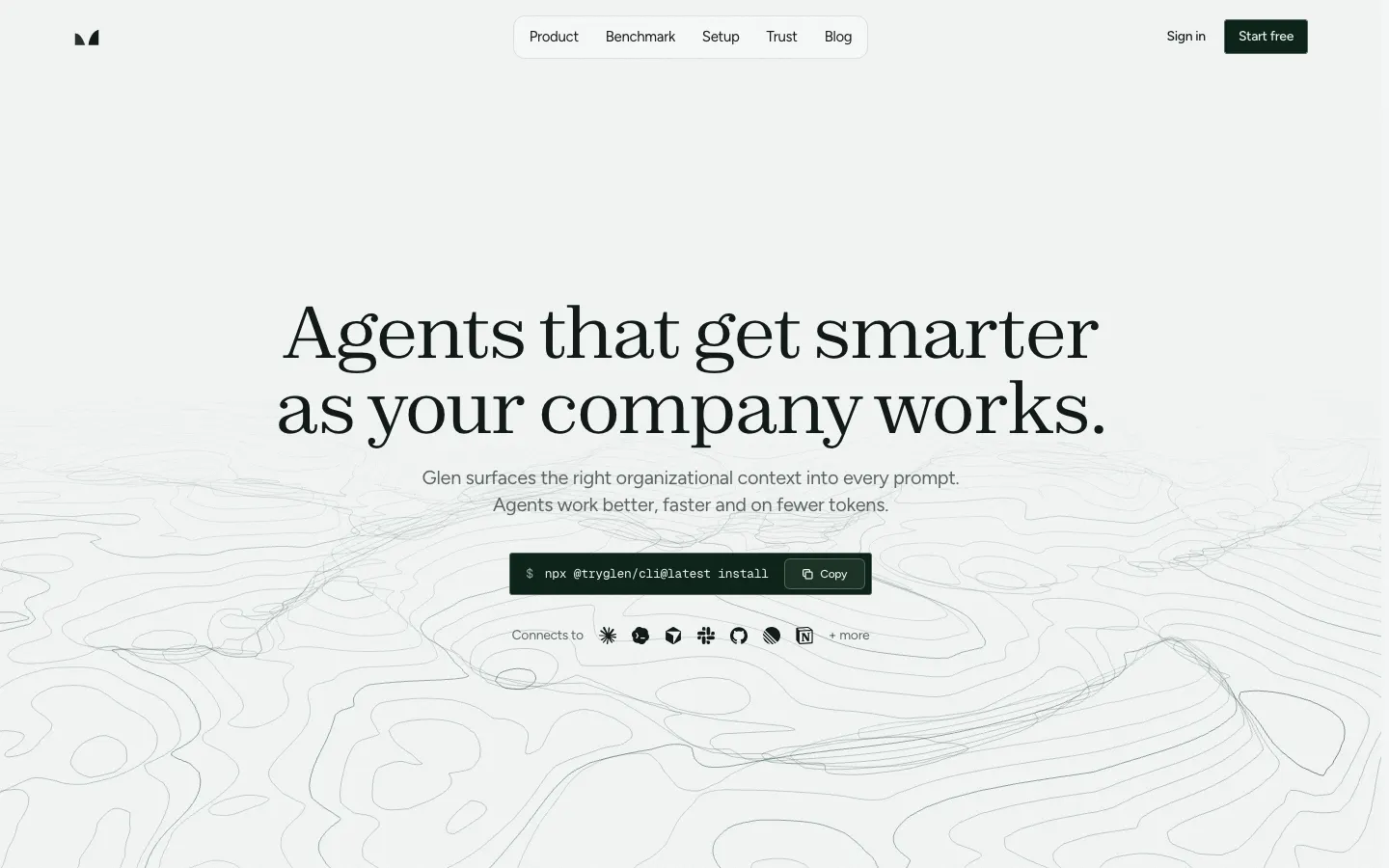
tryglen.com - Connects to ChatGPT
- Remote MCP app (OAuth)
- Captures
- None from ChatGPT; writes only through tools you approve
- Shared with your team
- Org-wide, filtered per user at recall
In ChatGPT, Glen is a remote MCP server at mcp.tryglen.com that you add once and sign in to with OAuth. When a question needs team context, ChatGPT calls glen_search; glen_code_search traces a line of code back to the agent conversation that wrote it, and glen_skill_search and glen_artifact_search find a saved skill or document. Recall happens when ChatGPT decides to call a tool or you ask it to. Nothing is injected ahead of the prompt, because ChatGPT has no hooks for that.
The memory itself is built elsewhere. Glen's plugins record every turn of your engineers' Claude Code, Codex and Cursor sessions, and one person connects public Slack channels, GitHub, tickets, docs and call transcripts from Fireflies, Fathom or Granola. Access control runs per observation at recall, so a chat only gets what you are already cleared to see, and a decision the team has since reversed stops surfacing. Glen does not record ChatGPT conversations. It writes only when a tool you approve runs: saving a skill or an artifact, importing a conversation with glen_import, or removing something with glen_forget.
Strengths
- Brings what teammates' coding agents worked out into a ChatGPT chat
- Results filtered per observation by what you're cleared to see
- Skills, artifacts and code search over the same connection
Limits
- Doesn't record ChatGPT chats; your own preferences stay in ChatGPT memory
- Recall waits for a tool call instead of arriving with every prompt
- A workspace admin may need to allow custom MCP servers first
Managed service · Free for 15,000 memories, no card
Set up Glen in ChatGPT →ChatGPT memory
Best for: Anyone using ChatGPT on their own who wants it to remember preferences and earlier chats.
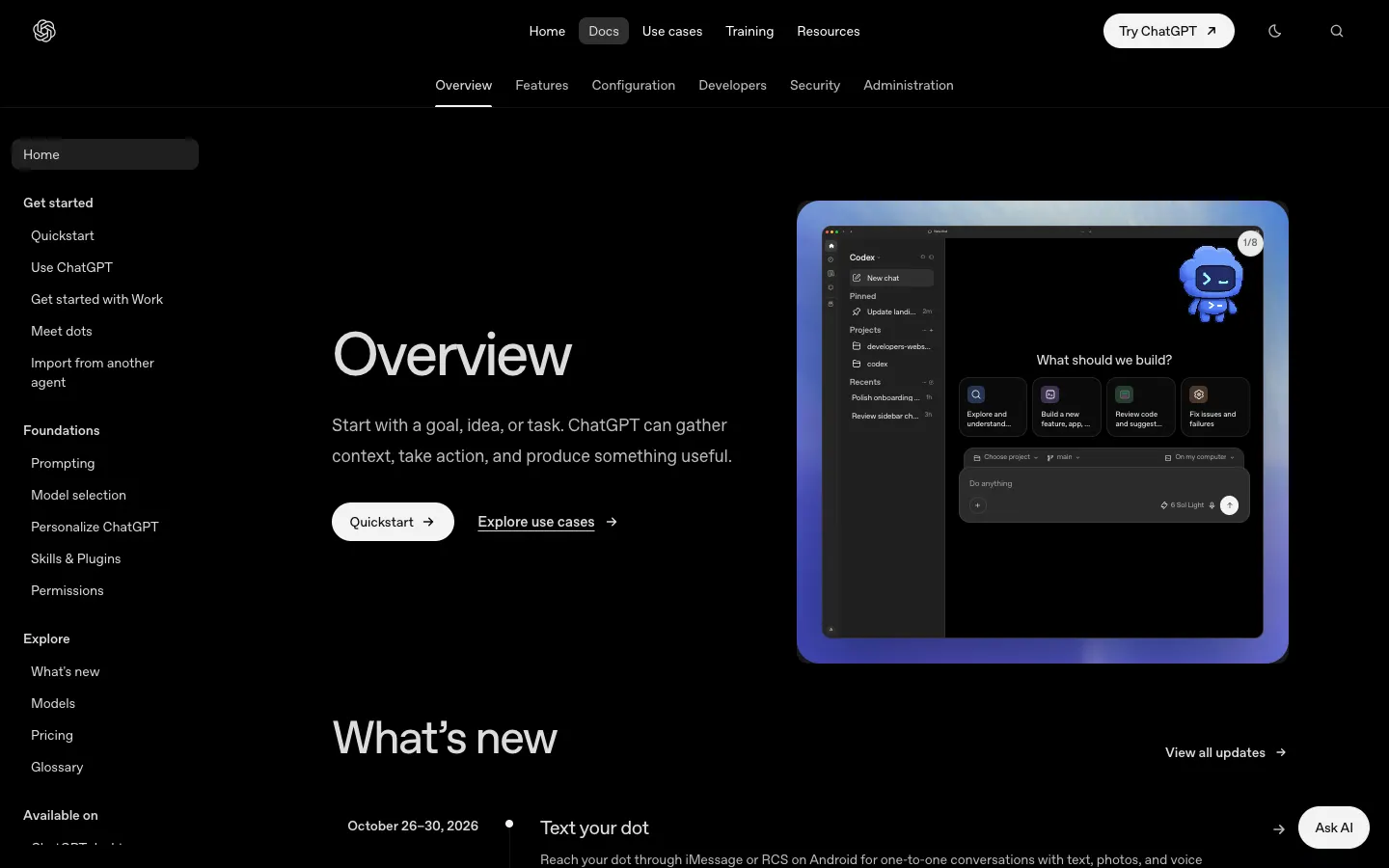
learn.chatgpt.com - Connects to ChatGPT
- Built in
- Captures
- Saved memories plus chat history
- Shared with your team
- One account; shared projects are project-only
Two switches in Settings > Personalization control it. Reference saved memories keeps the facts ChatGPT has saved about you, and Reference chat history lets it draw on earlier conversations. Each project can use your default memory or project-only memory, and shared projects are always project-only. Since May 2026 a Sources view shows which memories went into a given answer, so you can see why ChatGPT assumed something.
OpenAI reported about 900 million weekly ChatGPT users in February 2026, and this is the memory every one of them can already turn on. For one person it is the right place to start. It stops at the account: a coworker's ChatGPT doesn't read it, and it holds nothing from coding agents, Slack or GitHub unless you paste it into a chat.
Strengths
- Nothing to install or pay for beyond ChatGPT
- Sources view shows which memories shaped an answer
- Project-only memory keeps a project's context apart
Limits
- Per user, with no team layer
- No hooks, so nothing from coding agents, Slack or GitHub arrives on its own
Built into ChatGPT · Included with ChatGPT
Visit learn.chatgpt.com ↗Supermemory
Best for: People who switch between ChatGPT, Claude, Grok and Gemini and want their memories to follow.
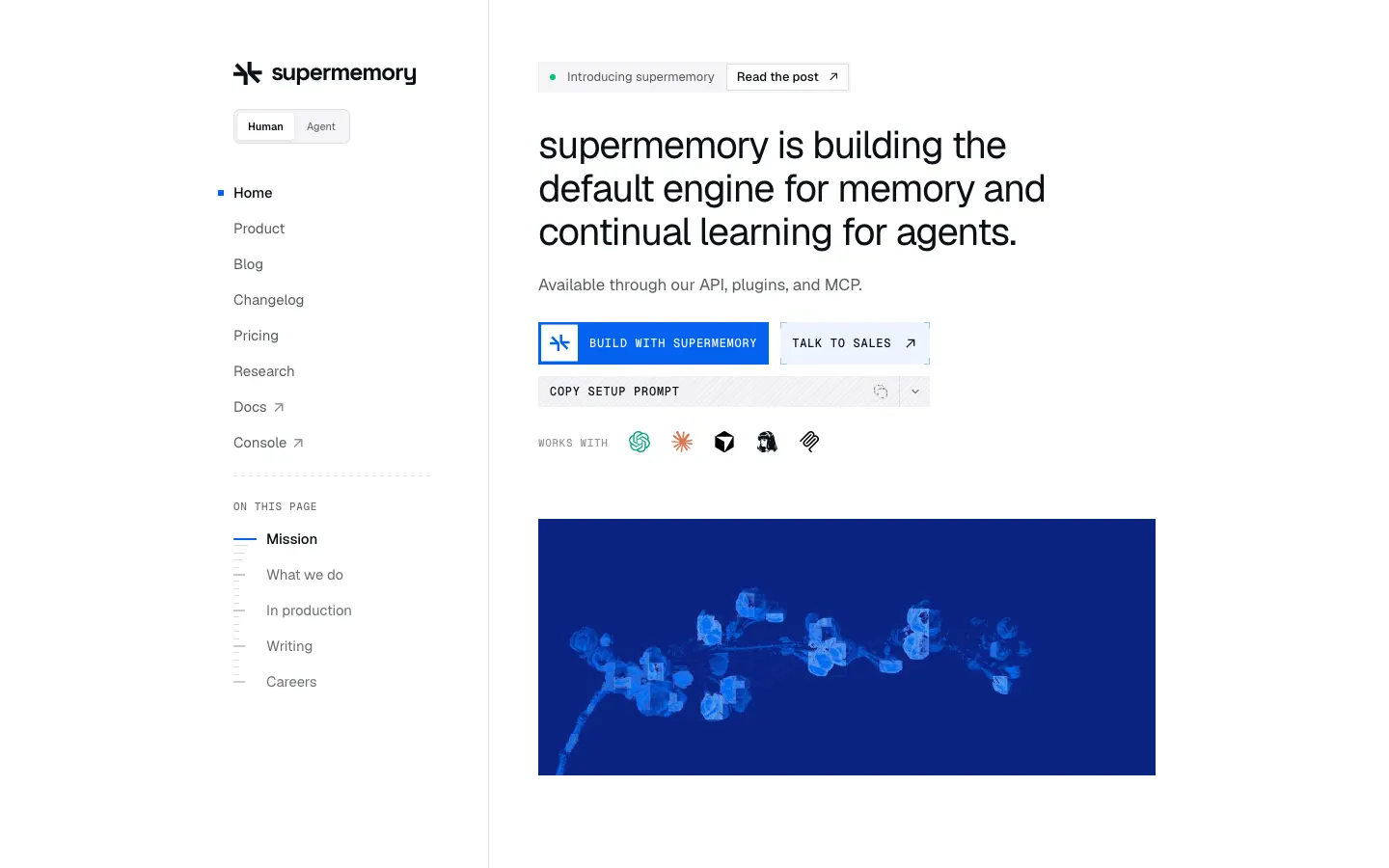
supermemory.ai - Connects to ChatGPT
- Remote MCP or Chrome extension
- Captures
- add_memory tool calls; imports via the extension
- Shared with your team
- Per container; orgs with scoped API keys
Supermemory documents a ChatGPT web setup for its remote MCP server at mcp.supermemory.ai, which signs in with OAuth. Over MCP, a memory is saved when the model calls add_memory, so capture depends on ChatGPT deciding to save. Its Chrome extension does something no other pick here does for ChatGPT users: it imports the memories you already have in ChatGPT, Claude, Grok or Gemini into Supermemory. The extension's suggest-while-typing feature covers Claude and Gemini only.
The same hosted API sits behind Supermemory's coding plugins for Claude Code, Cursor, Codex and OpenCode, which capture automatically through hooks, and behind anything you build on it yourself. The core is MIT-licensed and can run in Docker, though ChatGPT still needs a public URL to reach it. New accounts get $5 of credit; Pro costs $19 a month with three seats.
Strengths
- Documented ChatGPT setup with OAuth
- Chrome extension imports your existing ChatGPT memories
- One API for chat apps, coding agents and your own product
Limits
- In ChatGPT, saving waits for an add_memory call
- Typing suggestions cover Claude and Gemini, not ChatGPT
- Usage is metered in credits
Open source (MIT) · Free with $5 credit; Pro $19/mo
Visit supermemory.ai ↗Zep
Best for: Companies on ChatGPT Business, Enterprise or Edu that want a shared context graph with access policies.
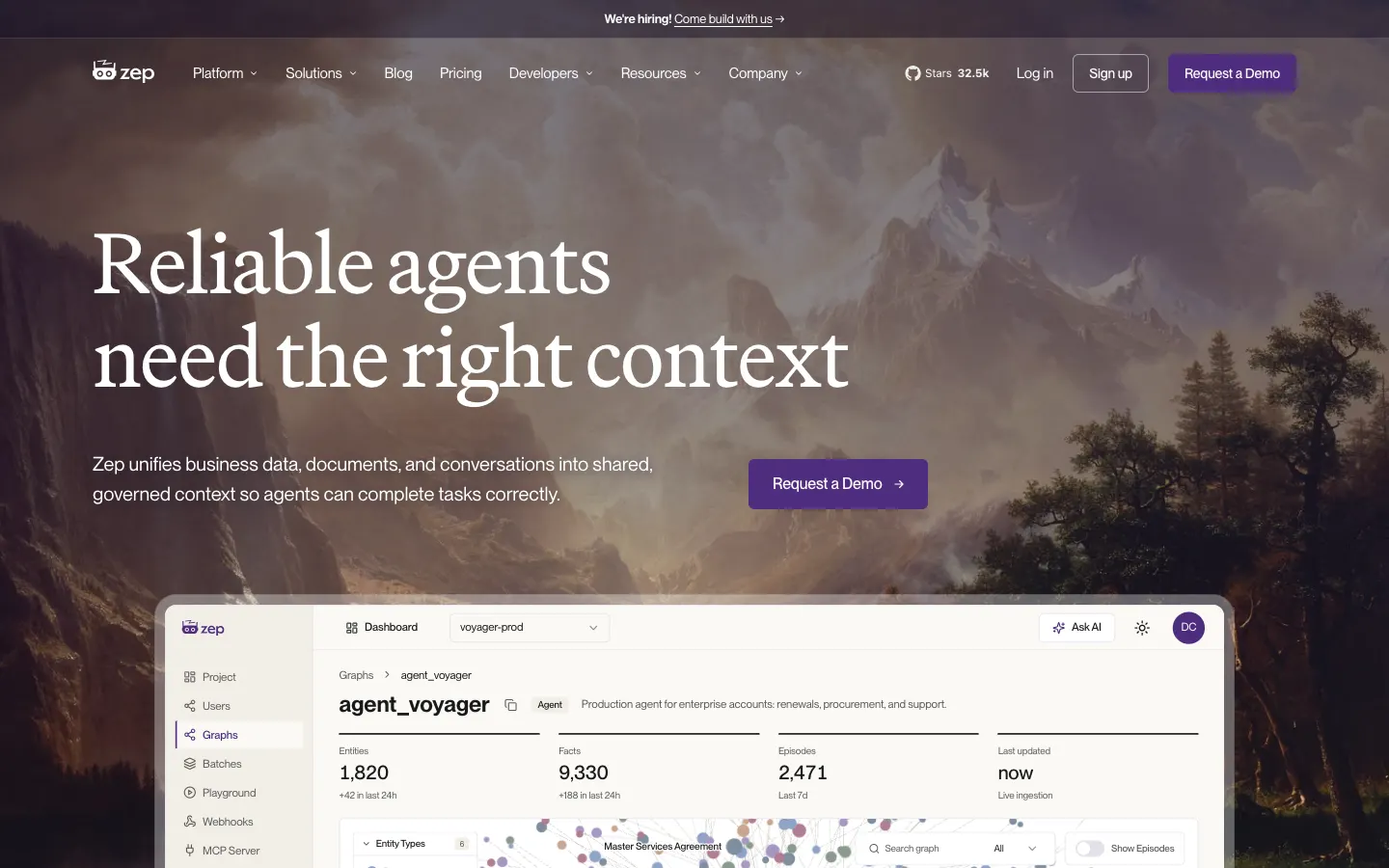
getzep.com - Connects to ChatGPT
- Zep Context plugin from the workspace catalog
- Captures
- Tool calls guided by a skill
- Shared with your team
- Shared graphs with group-based (ABAC) policies
Zep Context, a skill plus a remote MCP server, is listed in the workspace catalog for ChatGPT Business, Enterprise and Edu, so an admin can install it for the workspace rather than each person adding a server. Sign-in to api.getzep.com goes through Google Workspace or the company's OIDC provider. There are no hooks; the bundled skill tells the model when to write.
Zep is a hosted context graph for businesses, built as a temporal knowledge graph, and its strength is governance: graphs are shared, and group-based (ABAC) access policies decide who reads what. The same plugin ships for Claude, Cursor, Claude Code and Codex CLI. Zep's Graphiti project is open source under Apache 2.0. The free tier includes 10,000 credits and one MCP seat; Flex costs $125 a month for five MCP seats.
Strengths
- Installed from the ChatGPT workspace catalog, so admins control it
- Group-based access policies on shared graphs
- Same plugin across Claude, Cursor and coding agents
Limits
- Only on ChatGPT Business, Enterprise and Edu
- Writes depend on the model following the skill
- Sign-in needs Google Workspace or a company OIDC provider
Graphiti is open source; Zep Cloud is not · Free tier; Flex $125/mo
Visit getzep.com ↗Basic Memory
Best for: People who want ChatGPT to read and write Markdown notes they also edit by hand.
basicmemory.com - Connects to ChatGPT
- Custom GPT actions plus a skill
- Captures
- Notes the model writes
- Shared with your team
- Cloud workspaces with members
Unlike the other picks, Basic Memory reaches ChatGPT through Custom GPT actions and a skill zip it provides, not through a custom MCP server. Underneath, memory is a folder of Obsidian-compatible Markdown notes that you and the model both read and write, and the same server is documented for Claude Desktop, Claude Code, Codex, Cursor and VS Code over MCP.
It fits people who treat memory as a notebook they curate rather than a log of everything that happened. Most notes are written by the model, when it decides something is worth keeping or when you ask. Locally it is free under AGPL-3.0; Basic Memory Cloud costs $19 a month per workspace with two members.
Strengths
- Plain Markdown files you own, readable in Obsidian
- Same notes from Claude, Codex and Cursor
- Free locally
Limits
- Goes through Custom GPT actions rather than ChatGPT's MCP support
- Capture depends on the model choosing to write
- AGPL license can rule it out inside some companies
Open source (AGPL-3.0) · Free locally; Cloud $19/mo per workspace
Visit basicmemory.com ↗claude-mem
Best for: A developer who records their own coding sessions and wants to search them from ChatGPT.
cmem.ai - Connects to ChatGPT
- Hosted MCP link (CMEM Pro)
- Captures
- None from ChatGPT; records coding-agent sessions
- Shared with your team
- One person; team sharing is a pilot
claude-mem records tool use and session ends in Claude Code, Cursor, OpenCode and Codex through hooks, compresses them into summaries with an LLM, and stores them locally in SQLite with full-text search and a Chroma index. In ChatGPT it can only recall. A hosted MCP link that comes with CMEM Pro lets ChatGPT search those summaries, and ChatGPT chats themselves are not captured.
So it covers the same ground as Glen in ChatGPT for one person: your own coding history, searchable from a chat. With about 112,000 GitHub stars it is also the most-starred project on this list. The local plugin is free under Apache 2.0, and CMEM Pro costs $30 a month after a 30-day trial. Its team feature, TeamBrain, was a pilot with no public pricing when we checked.
Strengths
- Free, open-source capture on your own machine
- Brings your own coding sessions into ChatGPT
- Automatic capture through hooks in four coding agents
Limits
- ChatGPT access needs the paid CMEM Pro plan
- Built around one person's sessions
Open source (Apache 2.0) · Free locally; CMEM Pro $30/mo
Visit cmem.ai ↗
Set up Glen in ChatGPT
Glen connects to ChatGPT as a custom MCP server, which needs Developer mode. On a Business or Enterprise workspace an admin may have to allow custom connectors first. You also need a Glen account; the free plan covers 15,000 memories with no card.
1. Open the plugins page
Go to chatgpt.com/plugins and choose Add custom MCP server.
2. Add Glen's MCP URL and sign in
Paste this URL, then sign in to Glen when ChatGPT opens the OAuth window.
https://mcp.tryglen.com/mcp3. Ask about past work
In a chat, ask something like "what did we decide about retrying failed webhooks?" and ChatGPT calls glen_search. Tools that write, such as saving an artifact or importing this conversation, run only after you approve them.
Which one should you pick?
Keep ChatGPT's own memory for what is about you: how you like answers written, which project you're in, what you asked last week. It does that well, the Sources view lets you check it, and nothing else on this list replaces it.
Glen answers a different question, which is what your team already knows. If your engineers run Claude Code, Codex or Cursor, their sessions are already the record of why the code looks the way it does, and with Slack, GitHub, tickets and call transcripts beside them Glen lets a ChatGPT chat search that record under each person's access. It won't record your chats or learn your preferences. Zep is the alternative for a ChatGPT Enterprise rollout that wants an admin-installed graph, and Supermemory suits someone moving between assistants.
FAQ
- How do I turn off ChatGPT memory?
- Go to Settings > Personalization and switch off Reference saved memories, Reference chat history, or both. A memory tool you added as a custom MCP server, such as Glen, is separate; ChatGPT only reaches it when it calls one of that server's tools.
- Does ChatGPT remember previous conversations?
- Yes, when Reference chat history is on. It can draw on earlier chats in new ones, and the Sources view added in May 2026 shows which memories shaped an answer. A project set to project-only memory keeps its context to itself.
- Can my team share ChatGPT memory?
- Not through ChatGPT's memory, which is per user; shared projects use project-only memory. Glen adds a shared layer: everyone connects to the same org, and each person's chat searches the org's memory filtered by what they're cleared to see.
- Does Glen save my ChatGPT conversations?
- No. Glen doesn't record ChatGPT chats. It writes only when a tool you approve runs, for example saving an artifact, importing a conversation, or forgetting something that's wrong.
- Why can't I add a custom MCP server in ChatGPT?
- Custom MCP servers need Developer mode, which is in beta. On a workspace, an admin has to enable it before members can add a server like Glen.
- Can I move my ChatGPT memories to another assistant?
- Supermemory's Chrome extension imports memories from ChatGPT, Claude, Grok and Gemini into Supermemory.